

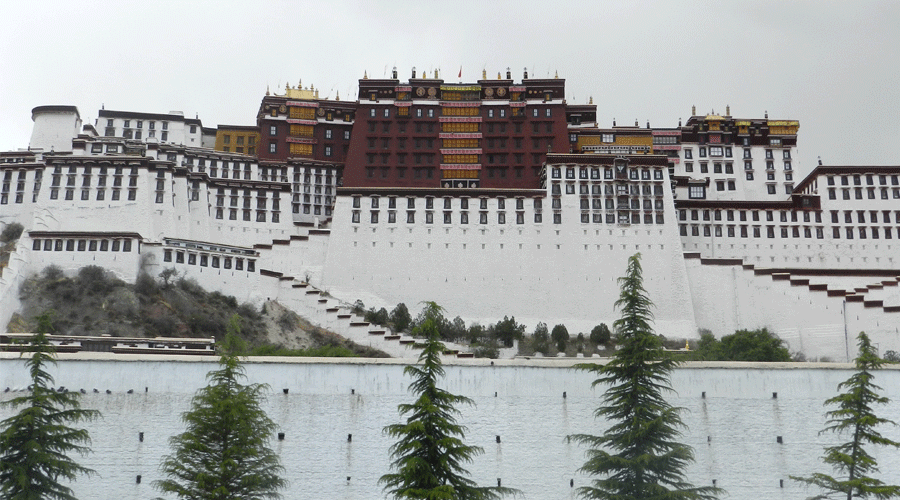
The ancient kingdom of Tibet also known as the roof of the world occupies most of the high arid plateau lying immediately north of the Greater Himalaya. It is a vast territory nearly 1,200 miles (2,000km) long and 600 miles (1,000km) wide, most of which lies more than 14,000ft/4,267m above sea level. Behind the high Himalayan barrier, it experiences little rainfall and is defined as mountain or a cold desert. ...See more
The ancient kingdom of Tibet also known as the roof of the world occupies most of the high arid plateau lying immediately north of the Greater Himalaya. It is a vast territory nearly 1,200 miles (2,000km) long and 600 miles (1,000km) wide, most of which lies more than 14,000ft/4,267m above sea level. Behind the high Himalayan barrier, it experiences little rainfall and is defined as mountain or a cold desert. The complete encirclement of Tibet by uncongenial mountains has helped it isolate itself for centuries.
There are many areas in Tibet yet to be discovered. Trekking in Tibet is an experience of attraction and exulted trepidation in a perfect harmony. Tibet is without doubt one of the most remarkable places to visit in Asia. It offers fabulous monastery sights, breathtaking high-altitude treks, stunning views of the world's highest mountains and one of the most likable peoples you will ever meet General Information Truly a 'Shangri La', and known as 'the Rooftop of the World' Tibet is a plateau locked away in its Himalayan fortress, Tibet has long exercised a siren's hold on the imagination of the West. Tibetans are used to hardship, and despite the Chinese occupation, they have managed to keep their culture and humors alive.
Tibet has an area of 1.2 million sq.km and has a population of about 2.7 million. The language spoken there are Mandarin, Tibetan and Cantonese. Tibet is a beautiful land with vast mountain ranges and abundant flora and fauna. Tibetans believe that many of their mountain tops are places where their early kings alighted after descending from heaven, but Mount Kailash has vastly more significance even than this.
TIBET GENERAL INFORMATION
Weather
Tibet is cold in winter and cool in summer and generally dry. Sunlight is extreme intense. The most pleasant months for Mt. Kailash trip are from May to October. However, from May and June there is a wind factor and dust storm to consider, so a warm windbreaker and stout comfortable shoes are highly recommended.
Fitness and Altitude
This trip can be joined by anyone who can walk for average of 5-6 hours a day. Our itinerary is set on slow pace hike to meet the acclimatization and enabling our clients to enjoy the best. But as this trips goes above 3000 m, you may suffer from Mountain sickness alias altitude sickness. Most of the trekkers once they are acclimatize; rarely suffer more than mild discomfort from the altitude. Advise: Drink approx. 3 liters of water per day.
Currency
RENMINBI, the people's money used by millions of Chinese everyday, circulates in notes of 1, 2,5,10 and 50, 100 Yuan, 1, 2 and 5 jiao; there are also coins for 1, 2 and 5 fen. With the Chinese currency Renminbi, one Yuan is divided into 10 jiao, into 10 fen (US$ 1= 8 Yuan). All hard currencies in any form (Cash /Travelers Checks) can be exchange in Zhangu bank on arrival.
Custom
There is no prohibition on still and video cameras, tape recorders as long as they're registered with a custom official; printed matters considered unsuitable by the Chinese government are prohibited. Customs regulations forbid the export of art objects created prior to 1959 or souvenirs in amounts deemed to be excessive. All baggage must be cleared through customs. Tourists may bring in dutiable goods such as tobacco and liquors (within the allowed quantity) duty free. Narcotics, arms and ammunition are strictly prohibited.
Transport & Roads
Roads in Tibet are, for the most part, unpaved. However they are improving day by day. Overland travel is by Jeep, Land Rover/Land Cruiser in Tibet section and in Nepal will be by private bus. A truck is provided to carry all the gears, food supply and camping stuff. Luggage must be kept to a minimum in jeep, as space inside vehicles can be tight. (Clients should be able to carry their own day pack in case of landslide etc.)
Clothing Accessories
Warm clothes are required to fight the frosty cold and light clothes to shun the scorching heat. However a jacket and a sweater are advised throughout the year as the weather may unexpectedly change at any time. The recommended item are: A domestic first aid kit, toilet and tissue papers flashlight, sleeping bag, comfortable walking shoes, dust masks, utility knife, sunhat, sun glasses, suntan lotion, and sufficient number of clothes for through out the trip. No Laundry service will be available throughout the trip.
Food & Drink
While trekking/touring, all main meals, tea, coffee, juice and drinking chocolate are included. All the food are prepared by our trained cook and are served hot, however in some occasion specially while traveling, pack lunch are provided to reach the next camp on time. Boiled water/mineral water will be provided at every camp to fill your drinking water bottle.
Accommodations
Accommodation will be in lodges at every point except at Kailash Parikarma and Mansorovar. At these two points, accommodation will be on tent, provided by us along with two form mattresses, sleeping bags. Hotels and guesthouses in Tibet may be star-rated, but this is in name only. Standards differ, and management of hotels is often poor. Clients should be prepared for what will be encountered - shared and often-unisex toilets, infrequent hot water for showers in rustic facilities, washing bowls for sponge baths, etc. Single room are often cannot be guaranteed.
Telephone/ Phone/ Fax
We understand the importance of being in touch with your dear and near ones. Though the means of communication are highly poor or almost nil in the trip, we are equipped with satellite phone. This enables you to remain in touch with your home through out the trip. Also telephone lines are available at various points of the journey. It is advised to leave behind our office contact number and address with your family in case of urgent message. Our offices will make it a point to dispatch your message to your home at the earliest.
Insurance
The participant to Kailash tour must have comprehensive travel protection insurance that includes curtailment of tour, helicopter evacuation and other medical emergencies. You must provide us with the name, policy number and emergency contact number of your chosen insurance company.
Emergency
Oxygen with mask and regulator sets for emergency/medical purpose is always available in each vehicle and during the trek/parikarma. Explore Kailash Treks makes every effort to minimize the risk of sickness and changes in itinerary. However, Charges for unforeseen circumstances are the responsibility of the clients. Eco Trip Nepal is not responsible for charges incurred in the case of illness, landslides, or other emergency events. In the case of a landslide, it may be necessary to transfer vehicles.
Passport, Visa & Travel Permit
All visitors to Kailash must hold valid passports, visas and permit. A Chinese visa is required to enter Tibet. Eco Trip Nepal will arrange your permit before you arrive at Kathmandu. Visa will be obtained immediately upon your arrival after collecting original passport. We will require 2 passport size photos and a photocopy of your passport or passport details along with your current profession during your reservation for the trip. The passport information must be provided to us at least a month prior to your trip.
Our Staff Guides and Cooks
We have well-trained and friendly staff to handle your tour to the best of our abilities. Our company staffs are friendly, polite and will greet you with a smiling face to erase you tired minds. Our guides are highly experienced and most of them have scaled peaks more than 8000 miters.
Oxygen and Portable Altitude Chamber
Oxygen cylinder or Portable Altitude Chamber will be provided for the whole tour, depending upon our agreements - Please note that Oxygen or Portable Altitude Chamber is to be used only in case of emergency. Responsibility: All arrangement, within Tibet is exclusively at the direction of China Tibet Tourism Bureau, a Government organization and we have no control over the quality of facilities.
Briefing and Orientation
A full briefing about trip will be conducted on the day of your arrival followed by the equipment checking, to ensure you all have proper gears/clothing for the trip. Any left behind items can be either hired or purchased at Kathmandu.
What you should take
- Food-snacks and chocolates.
- Water bottle.
- Sunglasses UV protection.
- Sunscreen lotion.
- Flash light and batteries.
- Camera and film.
- Scarf.
- Warm jacket.
- Thermal underwear.
- Warm trousers.
- Warm Sweaters.
- Woolen shirts.
- Gloves.
- Warm hat and scarves.
- Monkey cap.
- Dust Mask.
- Woolen socks.
- Snicker.